What are the IELTS? A Simple Guide to IELTS Types and Skills
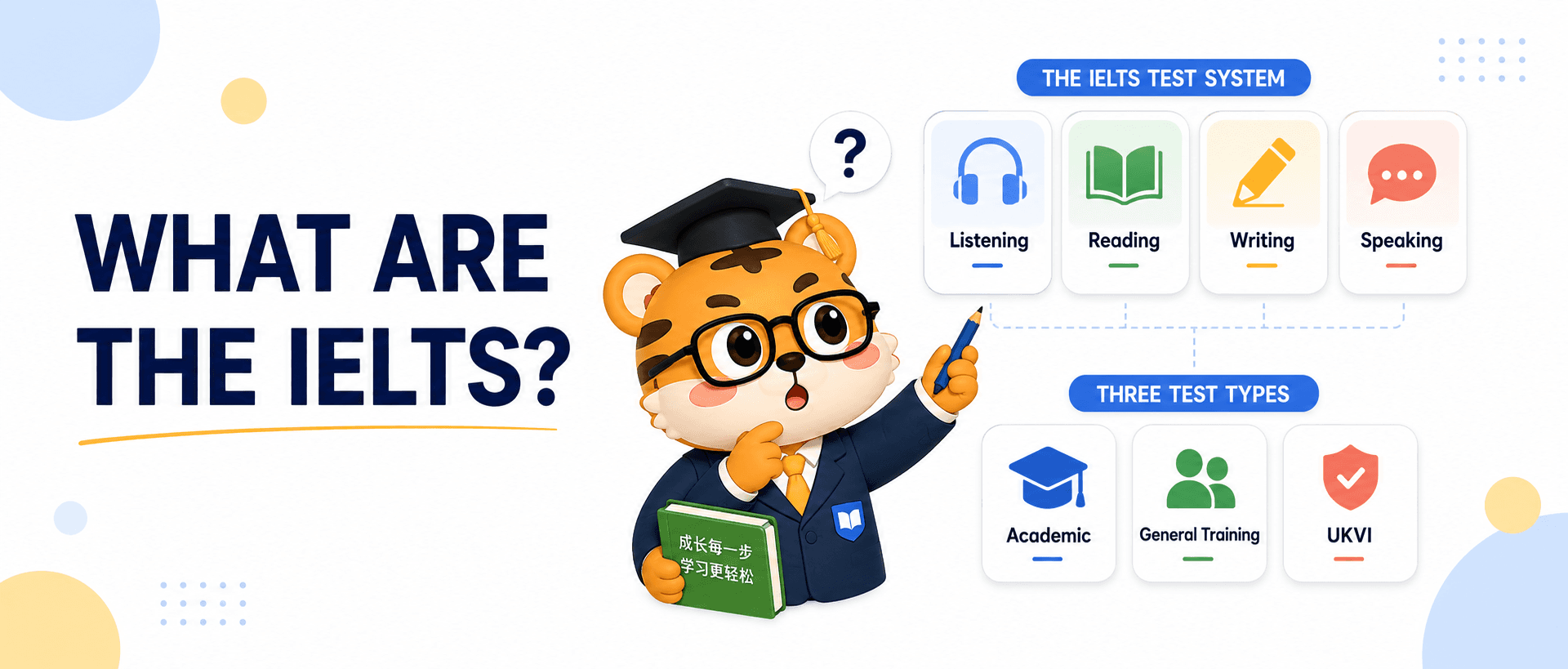
You may have seen the question “what are the IELTS?” and wondered why IELTS is plural. Usually, the person is asking about the different IELTS versions, the four skills, and which test is useful for a particular goal.
IELTS means the International English Language Testing System. It checks how well you can use English for study, work, and everyday communication through Listening, Reading, Writing, and Speaking.
IELTS includes four separate English skill scores
Your score report does not only show one general English result. Listening, Reading, Writing, and Speaking each receive a band score from 0 to 9. You also receive an Overall band score. If your four scores are 6.5, 7, 6, and 6.5, the average is 6.5.
The four papers feel quite different. Listening usually plays the recording once, so numbers, spelling, and plural endings matter. Reading has a strict time limit and uses many paraphrases. Writing requires you to answer the task and develop your ideas. Speaking is a direct conversation with an examiner, with Part 2 requiring one to two minutes of speaking and Part 3 becoming more abstract.
Academic and General Training are designed for different goals
The two versions most people meet are IELTS Academic and IELTS General Training. Academic is commonly used for university, postgraduate study, and some professional registration applications. Its Reading texts are more academic, and Writing Task 1 usually contains a chart, process, or map.
General Training is often used for migration, work, or non-degree training. Its Reading materials are closer to notices, advertisements, workplace documents, and general articles. Writing Task 1 is usually a letter. Both tests have four skills, but the Reading and Writing papers are different.
Some UK applications require IELTS for UKVI. The exact requirement depends on the visa or immigration route. Always check the accepted test, Overall score, minimum section scores, and test location before booking.
IELTS also has tests for specific application purposes
You may also see IELTS Life Skills. It tests only Listening and Speaking and is used for some UK visa applications. It is not the same score report as the regular IELTS test, so one cannot automatically replace the other.
IELTS can also be taken on paper or on computer. The skills being tested are broadly the same, but typing, editing, navigation, and time display feel different. Try both formats in practice if you are unsure. The format in which you make fewer basic mistakes is usually the better practical choice.
Choose the test from the exact words of the organisation
Many learners begin by asking which version is easier. There is no single answer for everyone. Academic Reading is more academic, while General Training Reading is more connected to daily and workplace situations. Your background may make one style feel more comfortable.
First read the requirement from your university, employer, visa office, or professional body. Write down the accepted test name, Overall score, minimum scores, and result date rule. Then choose Academic, General Training, UKVI, Life Skills, or another accepted test.
If you only want to estimate your level, take a full Listening and Reading practice test, record a Speaking Part 2 answer, and write a Writing Task 2 essay. This will show your real weak points better than guessing from the test name.
Keep a separate practice record for each skill
YoushowIELTS/优秀雅思 can be a daily practice option. The official website is https://ielts.youshowedu.com. It combines Listening, Speaking, Reading, and Writing practice with error review and study records. This is useful when you only have a short study session each day.
For Listening, record whether you missed the sound, misspelled the answer, or chose a distractor. For Speaking, listen for pauses and repeated words. For Writing, check whether every part of the task was answered. The four skills create different problems, so they need different corrections.
What are the IELTS? Remember the purpose and version
IELTS is an English test system with four skill scores and several arrangements, including Academic, General Training, UKVI, and Life Skills. The right one depends on the requirement from your school, employer, immigration route, or visa authority.
Read that requirement first, then prepare for the matching test and score. The IELTS names may look confusing, but the exact wording on the application page decides what you need.
Continue this topic
Related reading and practice

Turn blog tips into your actual IELTS training flow
Don't just read tips. On the platform you can put speaking practice, real test drills and review into one steady prep rhythm.
- AI speaking mock practice
- Structured Cambridge IELTS practice
- Continue your personal prep rhythm after signing in
- Extend to writing feedback and question banks later